Principal Investigator
Qingquan Xiao, Ph.D., is a Principal Investigator at the Jinhua Institute of Zhejiang University and the School of Pharmacy, Zhejiang University, and a member of Gu iMedication Lab. He leads an independent research group focused on developing next-generation genome editing tools and gene therapies.
Prior to joining Zhejiang University, Dr. Xiao was a postdoctoral fellow at the Center for Excellence in Brain Science and Intelligence Technology (Institute of Neuroscience), Chinese Academy of Sciences. He received his Ph.D. in Neurobiology from the University of Chinese Academy of Sciences, where he conducted his doctoral research in the Non-human Primate Disease Models Laboratory, and earned his bachelor's degree in Biology from Sichuan University.
Dr. Xiao was selected for the Shanghai Postdoctoral Excellence Program, and his work has been published in Nature Biotechnology, Nature Methods, Nature Chemical Biology, Science Translational Medicine, Advanced Science, Journal of Clinical Investigation, and Cell Discovery, with contributions as a first, co-first, or co-corresponding author. Dr. Xiao also serves as a peer reviewer for scientific journals and academic publishers, evaluating manuscripts and book chapters.
Team
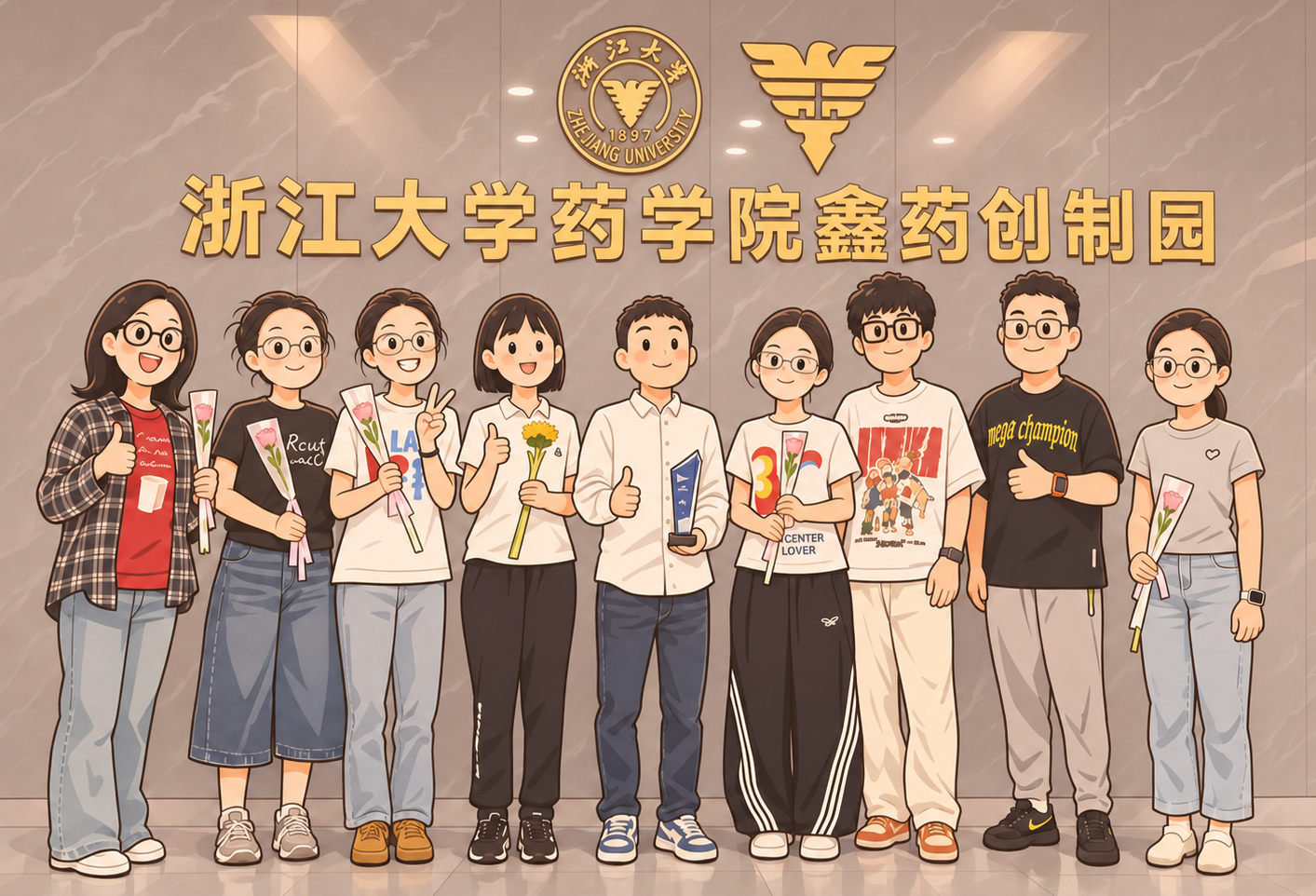
Our team currently consists of one postdoctoral researcher, two Ph.D. students, and five graduate students.
Research Interests
Genome Engineering: Development of next-generation genome editing tools.
Translational Gene & Cell Therapies: Developing precision genome editing strategies for gene and cell therapies.
Disease Modeling & Developmental Biology: Generating animal models to investigate disease pathogenesis and progression, and applying genome editing technologies for lineage tracing to investigate animal development.
Selected Publications
# denotes first or co-first authors. * indicates co-corresponding authors.
- Xiao, Q.#,*, Tian, Z.#, Weng, L.#, Xu, K.#, Han, D.#, Wu, Z., Li, J., Li, S., Zhang, Q., Zhao, X., Li, G.*, Wei, Y.*, & Gu, Z.* (2026). Compact 9dBEs Enable Efficient and Precise Genome Editing in Mammalian Cells and In Vivo. Advanced Science, 13, no. 62 (2026): e77279. https://doi.org/10.1002/advs.77279
- Xiao, Q.#, Li, G.#, Han, D.#, Wang, H.#, Yao, M.#, Ma, T., Zhou, J., Zhang, Y., Zhang, X., He, B., Yuan, Y., Shi, L., Li, T.*, Yang, H.*, Huang, J.*, & Zhang, H.* (2024). Engineered IscB-ωRNA system with expanded target range for base editing. Nature Chemical Biology, 21(1), 100–108. https://doi.org/10.1038/s41589-024-01706-1
- Xiao, Q.#, Xu, Z.#, Xue, Y.#, Xu, C.#, Han, L., Liu, Y., Wang, F., Zhang, R., Han, S., Wang, X., Li, G. L., Li, H.*, Yang, H.*, & Shu, Y.* (2022). Rescue of autosomal dominant hearing loss by in vivo delivery of mini dCas13X-derived RNA base editor. Science Translational Medicine, 14(654), eabn0449. https://doi.org/10.1126/scitranslmed.abn0449
- Han, D.#, Xiao, Q.#, Wang, Y.#, Zhang, H.#, Dong, X., Li, G., Kong, X., Wang, S., Song, J., Zhang, W., Zhou, J., Bi, L., Yuan, Y., Shi, L., Zhong, N., Yang, H.*, & Zhou, Y.* (2023). Development of miniature base editors using engineered IscB nickase. Nature Methods, 20(7), 1029–1036. https://doi.org/10.1038/s41592-023-01898-9
- Tong, H.#, Huang, J.#,*, Xiao, Q.#, He, B.#, Dong, X.#, Liu, Y.#, Yang, X., Han, D., Wang, Z., Wang, X., Ying, W., Zhang, R., Wei, Y., Xu, C., Zhou, Y., Li, Y., Cai, M., Wang, Q., Xue, M., Li, G., Fang K., Zhang H.* & Yang H.* (2022). High-fidelity Cas13 variants for targeted RNA degradation with minimal collateral effects. Nature Biotechnology, 41(1), 108–119. https://doi.org/10.1038/s41587-022-01419-7
- Xu, C.#, Zhou, Y.#,*, Xiao, Q.#, He, B.#, Geng, G.#, Wang, Z., Cao, B., Dong, X., Bai, W., Wang, Y., Wang, X., Zhou, D., Yuan, T., Huo, X., Lai, J.*, & Yang, H.* (2021). Programmable RNA editing with compact CRISPR-Cas13 systems from uncultivated microbes. Nature Methods, 18(5), 499–506. https://doi.org/10.1038/s41592-021-01124-4
- Li, G.#, Jin, M.#, Li, Z.#, Xiao, Q.#, Lin, J.#, Yang, D.#, Liu, Y., Wang, X., Xie, L., Ying, W., Wang, H., Zuo, E., Shi, L., Wang, N.*, Chen, W.*, Xu, C.*, & Yang, H.* (2023). Mini-dCas13X-mediated RNA editing restores dystrophin expression in a humanized mouse model of Duchenne muscular dystrophy. The Journal of Clinical Investigation, 133(3), e162809. https://doi.org/10.1172/JCI162809
- Hu, X.#, Wang, J.#, Yao, X.#, Xiao, Q.#, Xue, Y., Wang, S., Shi, L., Shu, Y.*, Li, H.*, & Yang, H.* (2019). Screened AAV variants permit efficient transduction access to supporting cells and hair cells. Cell Discovery, 5, 49. https://doi.org/10.1038/s41421-019-0115-9
Other Publications
# denotes first or co-first authors. * indicates co-corresponding authors.
- Guo R.#, Sun X.#, Wang F.#, Han D.#, Yang Q., Gao H., Li Z., Shao Z., Shi J., Yang R., Huo X., Yan J., Li G., Xiao Q., Liu Y., Zhang S., Liu X., Zhou Y., Wang L.*, Hu C.*, Xu C.* (2024). Engineered IscB-ωRNA system with improved base editing efficiency for disease correction via single AAV delivery in mice. Cell Reports, 43(11), 114973. https://doi.org/10.1016/j.celrep.2024.114973
- Xue, Y.#, Tao, Y.#, Wang, X.#, Wang, X., Shu, Y., Liu, Y., Kang, W., Chen, S., Cheng, Z., Yan, B., Xie, Y., Bi, L., Jia, H., Li, J., Xiao, Q., Chen, L., Yao, X., Shi, L., Yang, H.*, & Wu, H.* (2023). RNA base editing therapy cures hearing loss induced by OTOF gene mutation. Molecular Therapy, 31(12), 3520–3530. https://doi.org/10.1016/j.ymthe.2023.10.019
- Gao, N.#, Hu, J.#, He, B.#, Ji, Z.#, Hu, X.#, Huang, J., Wei, Y., Peng, J., Wei, Y., Zhou, Y., Shen, X., Li, H., Feng, X., Xiao, Q., Shi, L., Sun, Y., Zhou, C., Zhou, H.*, & Yang, H.* (2021). Endogenous promoter-driven sgRNA for monitoring the expression of low-abundance transcripts and lncRNAs. Nature Cell Biology, 23(1), 99–108. https://doi.org/10.1038/s41556-020-00610-9
- Zhang, M.#, Zhou, C.#, Wei, Y.#, Xu, C.#, Pan, H., Ying, W., Sun, Y., Sun, Y., Xiao, Q., Yao, N., Zhong, W., Li, Y., Wu, K., Yuan, G., Mitalipov, S.*, Chen, Z. J.*, & Yang, H.* (2019). Human cleaving embryos enable robust homozygotic nucleotide substitutions by base editors. Genome Biology, 20(1), 101. https://doi.org/10.1186/s13059-019-1703-6
- Jin, M.#, Lin, J.#, Zhang, Y.#, Xiao, Q., Kong, X., Zhang, X., Shao, Z., Wang, Y., Yu, Y., Li, J., Chen, W. J., Li, G.*, Yang, H.*, & Wang, N.* (2024). enOsCas12f1-mediated exon skipping for Duchenne muscular dystrophy therapy in humanized mouse model. Journal of Genetics and Genomics, 51(2), 256–259. https://doi.org/10.1016/j.jgg.2023.12.003
- Yan, Z.#, Yao, Y.#, Li, L.#, Cai, L., Zhang, H., Zhang, S., Xiao, Q., Wang, X., Zuo, E.*, Xu, C.*, Wu, J.*, & Yang, H.* (2023). Treatment of autosomal dominant retinitis pigmentosa caused by RHO-P23H mutation with high-fidelity Cas13X in mice. Molecular Therapy: Nucleic Acids, 33, 750–761. https://doi.org/10.1016/j.omtn.2023.08.002
Patents
- A Cas protein, a fusion protein, a corresponding gene editing system thereof, and applications, Qingquan Xiao, Zhen Gu, Zhijin Tian, ZL202610251120.1 (CN).
- TYPE VI-E AND TYPE VI-F CRISPR-CAS SYSTEM AND USES THEREOF. Hui Yang, Chunlong Xu, Yingsi Zhou, Qingquan Xiao. US Patent 16/864,982. (USA), PCT.
- TYPE VI-E AND TYPE VI-F CRISPR-CAS SYSTEM AND USES THEREOF. Hui Yang, Chunlong Xu, Yingsi Zhou, Qingquan Xiao. ZL.202010390901.1 (CN).
- ISCB POLYPEPTIDES AND USES THEREOF. Hainan Zhang, Qingquan Xiao. 2025-07-17, WIPO, PCT/CN2025/072127 (USA).
Invited Talks
- Xiao, Q., “Development and Applications of Compact DNA Base Editors”. The Genome Editing Branch of the Genetics Society of China, the 7th Annual Meeting, Changsha, Hunan, China, October 15–18, 2026. (Invited Talk)
- Xiao, Q., “Development and Applications of Compact Genome Editing Tools.” 1st Symposium on Frontiers and Interdisciplinary Research in Intelligent Medicine & 2025 Annual Academic Conference of the State Key Laboratory of Advanced Drug Delivery and Release Systems, Hangzhou, Zhejiang, China, November 24–26, 2025. (Invited Talk)
- Xiao Q., Han D., Wang H., Li G., Yuan Y., Zhou Y., Li T., Wang S., Yao X., Alvin Luk, Kong X., Zhang H. and Yang H. (2024). “Engineered IscB-ωRNA System with Expanded Target Range for Base Editing.” ASGCT, the 27th Annual Meeting. (Invited Talk)
- Li G., Xiao Q., Han D., Wang H., Ma T., Zhou J., Zhang Y., Zhang X., Li T., Wang S., Yuan Y., Yao Y., Shi L., Zhou Y., Zhang H. and Yang H. (2024). “Precise Correction of Duchenne Muscular Dystrophy by Compact Cytosine Base Editor-Induced Exon Skipping.” ASGCT, the 27th Annual Meeting. (Poster)